

By Shilpa Gandhi
By Shilpa Gandhi Family, Marriage, Child & Adolescent Counsellor and Parent & Emotional Wellness Coach Lifetime Member, Counsellors Council of India (CCI)
A Child Counsellor in Pune Explains Brain Development, Self-Regulation and Positive Parenting
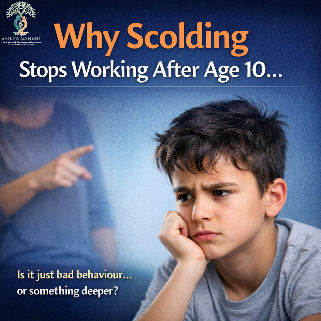
Many parents search online asking:
“Why does my child not listen after age 10?”
“Why scolding is not working anymore?”
As a child and teenage counsellor in Pune, this is one of the most common concerns parents bring to counselling sessions.
The answer lies not in attitude — but in brain development and emotional regulation.
What Changes in a Child’s Brain After Age 10?
After the age of 10, children enter early adolescence, a phase marked by rapid emotional and neurological changes.
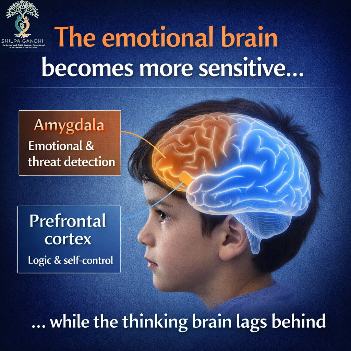
Two brain areas are especially important:
- Amygdala – controls emotions, stress, and threat response
- Prefrontal Cortex – responsible for thinking, self-control, decision-making, and self-regulation
At this stage:
- The emotional brain becomes more sensitive
- The thinking brain is still developing and matures much later
This imbalance explains why children may:
- React emotionally
- Avoid responsibilities
- Shut down during confrontation
- Struggle with self-regulation
This is normal adolescent brain development, not disobedience.
Why Scolding Stops Working After Age 10
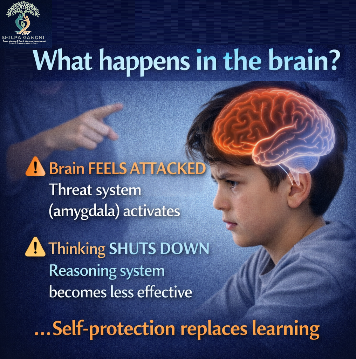
When a child is scolded, the brain does not focus on learning.
Instead, it activates the stress response.
From a counselling and psychology perspective:
- Scolding triggers fear or defensiveness
- The thinking brain temporarily shuts down
- Emotional regulation becomes difficult
This is why scolding may stop behaviour temporarily, but it does not build responsibility, understanding, or maturity.
Parents often notice:
- Repeated arguments
- Emotional withdrawal
- Reduced communication
- Increased resistance
These are signs of emotional overload, not lack of values.
Why Scolding Worked Earlier — But Not Now
In younger children, behaviour is guided more by external control.
As children grow:
- They seek independence
- They become sensitive to tone, respect, and fairness
- They need guidance, not fear
After age 10, children learn better through connection, not correction alone.
The Role of Self-Regulation in Children and Teenagers
Self-regulation is the ability to:
- Manage emotions
- Pause before reacting
- Handle frustration
- Take responsibility for behaviour
This skill does not develop automatically.
Children borrow self-regulation from adults before they can develop it themselves.
When parents stay calm and connected:
- The child’s nervous system settles
- The thinking brain stays active
- Learning and reflection become possible
This is why calm guidance works better than scolding.
Discipline vs Fear: What Actually Builds Responsibility?
- Fear controls behaviour
- Connection teaches behaviour
Discipline is not about punishment.
It is about teaching emotional awareness, limits, and responsibility with connecting. This approach supports healthy teenage emotional development.
When Parents Should Seek Support
If you notice:
- Constant conflicts with your child or teenager
- Scolding leading to shutdown or anger
- Difficulty handling emotions at home
- Feeling emotionally exhausted as a parent
Seeking support from a child or teenage counsellor can help.
Counselling is not about blaming parents or children.
It is about understanding behaviour and learning better ways to connect.
A Note for Parents
Parenting after age 10 requires a shift, not more effort.
Children do not need louder voices.
They need calmer guidance, emotional safety, and connection.
With the right support, parents can build cooperation without fear.
About the Author
Shilpa Gandhi
Family, Marriage, Child & Teenage Counsellor
📍 Pune | Online & Offline Counselling Sessions Available
Specialising in:
- Child behaviour concerns
- Teenage emotional issues
- Parenting support
- Emotional self-regulation
- Family communication